
ICAN BCBA First-Year Residency
Your first year as a clinician should build confidence, not leave you figuring it out alone.
ICAN’s paid, one-year residency gives first-year BCBAs and LABAs the mentorship, applied practice, and added oversight needed to become confident, independent case managers. Residents work in a regular full-time BCBA or LABA role while growing through a weekly cohort training, dedicated mentorship, and 1–2 hours of hands-on lab learning each week.
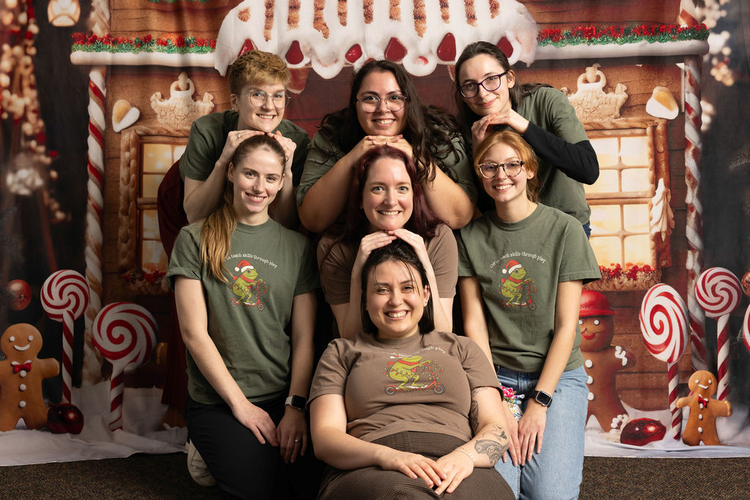
Two ways to begin
Start where you are. Grow into the clinician you want to become.
Whether you are already licensed or still completing BCBA coursework, ICAN offers a pathway into supported case management.
I’m a new grad or first-year LABA or BCBA
-
1
Apply for a full-time role
Join ICAN as a full-time paid LABA or BCBA team member.
-
2
Join the residency cohort
Begin weekly cohort learning, lab practice, and one-to-one mentorship during your first year.
-
3
Build toward independence
Take on increasingly complex case-management responsibilities with support close at hand.
I’m currently a BCBA student
-
1
Join ICAN as a Behavior Technician
You can apply at any point during your BCBA coursework and begin learning within the clinical environment.
-
2
Grow while completing your coursework
Build practical experience, relationships, and familiarity with ICAN’s approach to care. Plus get access to free student supervision to obtain restricted and unstricted hours.
-
3
Earn your LABA or BCBA and enter the cohort
After receiving your LABA, transition into a full-time clinician role and join the first-year residency.
Ready to build your clinical career with support?
Apply for a current ICAN opening or reach out to learn whether the residency is right for you.
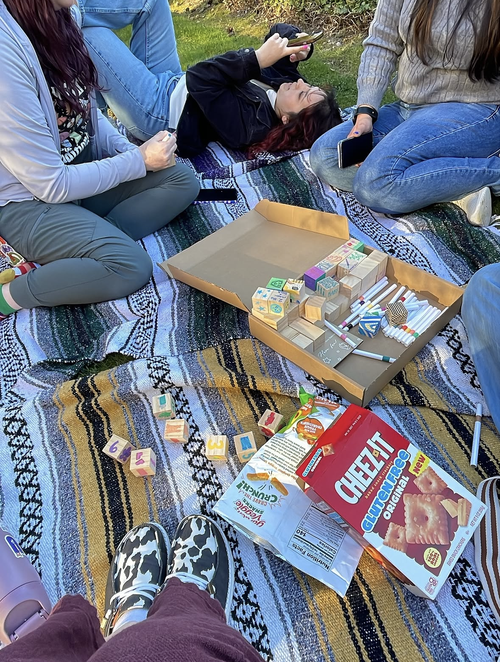
Beyond the textbook
Learn, practice, and master the soft skills that make case management work. Deepen your understanding of being in control of your own schedule and mastering insurance authorization submissions.
The curriculum connects clinical knowledge to the conversations, decisions, documentation, collaboration, and leadership required in everyday practice.
Neurodiversity-Affirming Care & Ethics
Use affirming language, navigate complex ethical decisions, and communicate ICAN’s approach with families and team members.
Assessment
Prepare for, select, observe, and complete assessments while involving families in a meaningful way.
Treatment Planning
Turn assessment results into individualized programs, measurable goals, data systems, and useful clinical instructions.
Supervision & Feedback
Build strong relationships with BTs, teach skills effectively, communicate changes, and give feedback that supports growth.
Parent Partnership
Plan and lead parent training, navigate difficult conversations, set boundaries, and support carryover beyond the clinic.
Clinical Decision-Making
Develop sound judgment across early-intervention, higher-support, and school age to preteen cases while keeping safety and quality of life central.
Interdisciplinary Collaboration
Partner with speech, occupational therapy, feeding, education, and other disciplines to create coordinated care.
School & IEP Collaboration
Understand IEPs, prepare families, participate effectively in meetings, and connect treatment goals to school needs.
Case Management & Administration
Manage schedules, authorizations, documentation, communication, and clinical priorities with growing independence.
Interested in learning these skills with a mentor beside you?

Developed and led by
Morgan Lloyd, MS, BCBA, LBA
Head of Clinical Programming
Morgan has worked in the field of ABA for more than 10 years, but her connection to the work began much earlier as a childhood peer model for her autistic siblings. Growing up in a family personally connected to autism—and one that also includes other BCBAs—shaped her commitment to care that respects the individual, includes the family, and creates meaningful change in everyday life.
Morgan studied Psychology Science–Behavioral Neurobiology before working at a high-intensity behavior school connected to Johns Hopkins University and the Kennedy Krieger Institute. She later earned her Master of Science in Applied Behavior Analysis from Northeastern University with a focus in early intervention. At ICAN, she initiated and continues to lead LEAP, JUMP, and the BCBA First-Year Residency.
Through the residency, Morgan is dedicated to helping clinicians grow, not only in technical skill, but in the judgment, confidence, and compassion needed to keep evolving ABA into care that truly makes a difference.
Learning that transfers to the work
Study it. Practice it. Demonstrate it. Own it.
Residency topics are paired with applied lab work and observable skill demonstrations. Your mentor provides extra support while you practice, then helps you take on greater independence as your judgment and consistency grow.
Learn
Build the clinical framework in the weekly cohort meeting.
Practice
Apply the skill during 1–2 supported lab hours each week.
Demonstrate
Show readiness through real work, observation, and skill pass-offs.
Lead
Manage cases with increasing confidence and independence.
The details
What to expect
Who is the residency for?
Full-time clinicians in their first year of practice as a LABA or BCBA at ICAN.
Is the residency a separate unpaid program?
No. Residents are paid as regular full-time LABAs or BCBAs while participating.
What does the residency cost?
Nothing. ICAN offers the residency at no cost as part of our investment in first-year clinicians.
What is the weekly commitment?
A weekly cohort meeting plus 1–2 hours of applied lab learning, supported by dedicated mentorship and added oversight.
Can I join ICAN before I receive my LABA?
Yes. BCBA students can join ICAN as Behavior Technicians at any point during their coursework, then enter the residency cohort after receiving their LABA.
What is the goal by the end of the year?
To become a confident, well-rounded clinician who can independently manage cases while knowing when and how to collaborate.
You do not have to navigate your first year alone.
Join ICAN now as a BCBA student and Behavior Technician, or apply for a full-time BCBA or LABA role and begin your first-year residency.